Showing posts with label Rough Reading. Show all posts

Tuesday, March 8, 2016

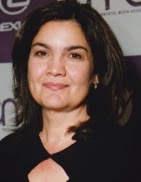
Interview with a Playwright: Steve Yockey

The 2016 Season of Rough Readings continues with a fresh set of new plays still in development. The March Rough Readings features Mercury from playwright Steve Yockey. We were fortunate enough to ask him some questions about this delightfully dark comedy:

Rachel Finkelstein: Thanks for taking the time to speak with us! Much of your work, Mercury included, is so surreal -- what draws you to that? 

Steve Yockey: I love when anyone says “surrealism.” It’s sexy. But as alluring as that label sounds, I honestly can’t own it. Sure, the mythic qualities are definitely there, the unexpected punctures in the natural world, but all of my work adheres to a pretty strict internal logic. There are rules; we’re driving towards something. 


Steve Yockey
I guess for all intents and purposes, it’s really just dark realism with some pretty grand theatrical gestures. I’ve always been fascinated by taking these intimate, very human stories and placing them right at the edge of something epic in size or unknown. Seeing the scale of those two things create friction. That’s where most of my plays live. Mercury takes something simple and familiar like failing relationships and casts them against the literally immense and horrifying mechanics of a vengeful universe. It’s fun. Or at least it should be fun. 

RF: Because underneath all of those more “mythic” details, the play really is about some deeply dysfunctional relationships. How do you want the audience so feel about relationships when they come away from the play? 

SY: Amused by the terrible choices? Although I’m betting some people will leave identifying with the terrible choices, which would also be pretty great. It’s essentially a dark comedy and only one character of the seven in the play is anywhere even close to being a “good” person. So it’s tricky. Maybe I’d like the audience to come away hoping these characters will become better people. I want to say it’s never too late for anyone, but the play doesn’t really make that case. 

RF: Why do you use so much overlapping speech in Mercury

SY: Oh, that’s something I use in all of my plays. In real life we don’t wait for other people to finish speaking, especially in heated exchanges. And it’s also a way of tuning rhythms and builds, like in a piece of music. 

RF: You write for several different forms of media, including for comics and TV -- how does that compare to playwriting? 

SY: Playwriting lets you be a little bit more ambitious with storytelling. I think that’s the best way to say it. In theatre we ask audiences to suspend their disbelief and imagine a lot more. That means we can take bigger swings.

RF: That's the beauty of it. Thanks again for your time!


The Rough Reading Series is Pay What You Can. The 2016 series continues with "Mercury" by Steve Yockey, playing Monday, March 14th, 7:30pm at Roble Hall, Stanford University and Tuesday, March 15th, 2pm at Custom Made Theatre, San Francisco.

Read more about "Mercury", Steve Yockey, and the Rough Reading Series at  Playwrightsfoundation.org

Save a Seat with an RSVP! Email rsvp@playwrightsfoundation.org or call 415.626.2176.

Friday, November 13, 2015

Interview with a Playwright: Dipika Guha

The Rough Readings Series is wrapping up for the year with Lifted by Dipika GuhaWe had the chance to interview Dipika Guha on her process, motivation, and experience as a Resident Playwright at PF.

You can view the entire interview on Vimeo, but here's just a sampling of some of her remarkably insightful thoughts:


Dipika Guha
"As a playwright, we have the opportunity to begin the world again when we write plays, and my plays tend to be set in imagined worlds that draw very real resonances from history, but they're always slightly askew...I think there's an attempt in that to foster a kind of imaginative space."

"I think tragicomedy in particular strikes me ... of life being both things simultaneously, that speaks to me as being true...There something in that multi-genre device that is thorny and poses the question rather than a simple solution."

"I think point of view can be embodied in a very direct way...where you are forced to take another perspective. And I think the more perspectives we can take on the world right now, the better it is. We do live in a globalized world, but it's also a world of such iniquity."

"There's a sort of pressure to devote ourselves from imagination and from play, and I think I'm drawn to everything that preserves that in the writing of my play worlds."

"There is such a diversity of aesthetic and voice in this room it's truly thrilling to be part of the [Resident Playwrights] Initiative."


Dipika Guha's Interview


The Rough Reading Series is Pay What You Can, and is closing out the year with "Lifted" by Dipika Guha, playing Tuesday, November 17th at 2:30pm at Custom Made Theatre in San Francisco and Wednesday, November 18th at 7:30pm at Roble Hall in Stanford University. 

Read more about "Lifted", Dipika Guha, and the Rough Reading Series at  Playwrightsfoundation.org.

Save a Seat with an RSVP! Email rsvp@playwrightsfoundation.org or call 415.626.2176.


* Member of Actors' Equity Association

Thursday, May 7, 2015

Interview with a Playwright: Lauren Gunderson

The 2015 Season of Rough Readings has brought us readings of four remarkable new plays in draft form, and is coming to a close this month with The Revolutionists by playwright Lauren Gunderson. 

The Revolutionists has also been selected for the 38th Annual Bay Area Playwrights FestivalYou can get a sneak peek of the festival and see this inspiring new work before it comes to the Tides Theatre stage this Summer!

As an additional treat, Lauren was kind enough to share some insight into the play's development -- read on below:

Rachel Finkelstein: Thanks for speaking with me! To start, I'd love to hear how you got interested in this topic and the four women the play is centered on.

Lauren Gunderson
Lauren Gunderson: I was in Paris with my mom and sister 3 years ago and we went to the Pantheon to visit Voltaire and Marie Curie (like ya do) and happened to read a footnote about a feminist playwright who was guillotined during the French Revolution that the people of Paris were considering re-interring there. I did a cartoon-style double take and said "Wait. A feminist playwright? During the French Revolution? Guillotines?!" After that it was a gradual exploration of that time and the striking similarities to our time in America: ridiculous war, drowning national debt, vast divide between rich and poor, institutional racism, and the quest for women's equality. But the play has really turned into a grander story about stories. Why we need to make art, what art does in times of crisis, how stories connect eras and philosophies across time. 

RF: That's as true today as it was then. So, how did you go about getting to know these women so intimately? 

LG: I basically wrote about myself and my cadre of incredible female friends, many of whom are artists. I wrote two of the roles for Kat Zdan* and Jessica Lynn Carroll* (who you'll see in the reading) which is a treat because I had their voices in my head. The fun of writing about historical women is in revealing their humanity, not indulging their mythology. Marie Antoinette was a woman, a mother, a scared mortal person not just a queen. The fun of the play is going into both the grandeur and the grounding of these women. 

RF: There's an incredible mix of history and modern language in the work, which makes it so relatable -- how did you find that balance between past and present?  

LG: I think it's mainly because I was making fun of myself for most of the play. The main character is a feminist playwright who's desperate to think that her work matters and can change the world for the better even though she knows that her work may be an outgrowth of her need to be in charge and speak for others. That's not a far leap from *ahem* someone I know very well. So the tone of the play starts out light, ludicrous, and confessional... until it crashes into the hot threat of violence and censorship of the Reign of Terror. Then it gets dangerous. Then it, ultimately, puts our main character nose to nose with mortality and her own legacy, which is something everyone across time has come to at some point. The play really aims for a timelessness. 

RF: In what ways has this work changed since inception, and in what ways do you hope it will develop moving forwards? 

LG: So many ways. Just last week I cut a whole character. And I'm continuing to rearrange scenes and revelations as I craft the larger story that erupts from the smaller ones. That's kinda vague but it means that this play is still very much in a kind of excavation and discovery. The work we'll do for these readings will have a huge impact on this play. 

RF: Thanks again, Lauren. I'm really looking forward to seeing this play action!


The Rough Reading Series is Pay What You Can, and is wrapping up with "The Revolutionists" by Lauren Gunderson, playing May 18th at 7:30pm at 424 Santa Teresa, Stanford University, and May 19th at 7pm at the Tides Theatre, San Francisco. 

Read more about "The Revolutionists", Lauren Gunderson, and the Rough Reading Series at  Playwrightsfoundation.org.

Save a Seat with an RSVP! Email rsvp@playwrightsfoundation.org or call 415.626.2176.


* Member of Actors' Equity Association

Tuesday, March 31, 2015

Interview with a Playwright: Lauren Yee

The 2015 Season of Rough Readings is now in full swing, granting audiences the rare chance to see up-close and personal readings of new plays in early draft form. We're continuing with King of the Yees, a brilliant new work by playwright Lauren Yee. We were able to speak with her about her work and process, and she's shared some wonderful insight below:

Rachel Finkelstein: Thanks for your time! King of the Yees touches upon some of the issues you face as a woman of Chinese ancestry, and I know you're a Fellow at the Women’s Project Playwrights Lab and a member of the Ma-Yi Theatre Writers Lab. As a playwright, what do you most hope to communicate about the intersection of culture and gender as it appears in your work?

Lauren Yee: I love it when cultures smash up against one another and I can make connections between seemingly disparate communities. King of the Yees reflects that in spades for me. To me, this play is a parent-child story and all those questions and stories you sometimes forget to ask about. It's also about those contradictory feelings on where we come from--what we love, what we don't, all the strange and wonderful things that reflect who you are.

RF: How did you go about partnering with the Contemporary Drama Working Group at UC Berkeley on this work, and what does that partnership entail?


Lauren Yee
LY: Because King of the Yees  is set in San Francisco Chinatown and is very much a local story, I really wanted to find different ways of introducing King of the Yees  to the Bay Area, and I'd heard great things from other playwrights about working with Berkeley's Contemporary Drama Working Group.

So now I have the really great opportunity to hear the play out loud in the Bay Area two times in April. After the UC Berkeley reading, I'm looking forward to making some changes, and I'm also really looking forward to working with Dennis Yen, one of my lead actors in both readings. We previously worked together on the play at a workshop in North Carolina at UNC Chapel Hill.

RF: This play deals with a lot of surrealism and completely obliterates the fourth wall in the process -- what got you going in this direction?

LY: For me, King of the Yees starts from a very real, grounded place and explodes outwards as we and our protagonist go through the journey of the play. I love asking the question of "how is this theatrical?" It also reflects a general trajectory in my writing thus far--when I first began writing, I started from a place of heightened realism, big farce, and have gradually continued my exploration of what it means to be big and theatrical and formally inventive. I want to write plays that surprise me as I'm writing them, and hopefully that translates to a satisfying experience for an audience, too.

RF: From what I've seen, I'm sure it will! Now, your father plays a huge role in this work - what level of involvement did your father have in the creation of the play?

LY: Absolutely none! Though he definitely did have a lot of ideas about what the play should be about, which was particularly interesting when he suggested things that had actually made their way into the play already. And I think I'm a writer who's deeply invested in strong character voices, so hearing a strong voice for this play really helped me to jumpstart it more quickly than usual.

RF: It really shows in the work. Thank you so much for sharing, Lauren!


The Rough Reading Series is Pay What You Can, and continues with "King of the Yees" by Lauren Yee, playing April 20th at 7:30pm at 424 Santa Teresa, Stanford University, and April 21st at 7pm at the Tides Theatre, San Francisco. 

Read more about "King of the Yees", Lauren Yee, and the Rough Reading Series at  Playwrightsfoundation.orgSave a Seat with an RSVP! Email rsvp@playwrightsfoundation.org or call 415.626.2176.

*Member of Actor's Equity Association


Tuesday, March 3, 2015

Interview with a Playwright: Erin Bregman

The 2015 Season of Rough Readings is now in full swing for the Winter and Spring seasons! Continuing over the next few months, we will be presenting audiences with up-close and personal readings of new plays in early draft form. Read more about Erin Bregman, The Lady Onstage, and the Rough Reading series at playwrightsfoundation.org

The March Rough Reading features The Lady Onstage, a new work by Erin Bregman. We were able to ask her a few questions about her work  -- read on below!


Rachel Finkelstein: Thank you for speaking with me! To start off, I'd love to hear about what drew you to write about Olga Knipper.

Erin Bregman
Erin Bregman: Actually, it was something that Graham [The Lady Onstage director M. Graham Smith] and Lauren [The Lady Onstage performer Lauren Bloom*] had been working on for a couple of years before they asked me to get involved. I jumped in mostly because I love Graham as a director, and totally trusted anything he would set out to create. But, I had never heard of Olga Knipper before starting this project. This is my first time working with Lauren, and it's been a blast, and have felt very lucky at every step that they asked me to join the team.

Then Graham mailed me a couple of books to read. One was a collection of letters written between Knipper and Checkhov, and the other was a biography about Olga. Her life is a great story in and of itself, and as soon as I started reading about her, I was hooked.

Ironically, it seems fitting that I was drawn to this piece as much for the collaboration as for the content. So much of what made Olga's work great and lasting was that she did it in the context of intense collaboration. So that's a nice accidental parallel!

RF: It is! So, how did you go about understanding Knipper's life and her impact on modern theater?

EB: One thing that Graham said at the beginning of this collaboration that has stuck with me was that there was a point early in Olga's career where she was just at the beginning of something great, and she didn't know it yet. She was working her ass off day in and out (the rehearsal and performance schedule she had definitely wasn't equity approved!), and hadn't yet come into the career she would later have. So that's the part I understand and identify with the most. I am just at the beginning of my own career as a writer, and have no idea where it will go. I'd be thrilled to have 1/1,000th the impact Olga seems to have had!

RF: Let's hope you do! I've noticed that this play is distinctly "you", but I also see some Chekhov seeping in here and there -- is that an intentional callback to Knipper's role as the "originator of the leading female roles in Chekhov's four major plays"?

EB: It's interesting that you say that. I can't say that I know Chekhov's work well enough to be able to distinguish what in this piece is me, and what might be Chekhov seeping in. However, As Knipper is the originator of the leading female roles in Chekhov's plays, [his work] is definitely a big part of her story.

RF: I can certainly see that in the play. Why did you choose to make this work a one-woman play? 

EB:  The last two pieces I've spent a lot of time working on have been 13+ person plays, which are great fun to write, but a one-woman play is a whole lot more manageable. Especially if you're trying to write a good draft in a year. Plus, that was the deal!

RF: I can imagine! As a quick follow-up, I know that in the 2013 BAPF, your play Before & After utilized actors playing multiple roles -- did the BAPF development process help you in writing multiple characters for one actor in The Lady Onstage?

EB: The development process from any play is going to impact how you work on the next one -- it's all just another tool in the toolbox.

RF: Well, I'm excited to see it in action next week -- thank you for sharing with us!


The Rough Reading Series is Pay What You Can, and continues with "The Lady Onstage" by Erin Bregman, playing March 9th at 7:30pm at 424 Santa Teresa, Stanford University, and March 10th at 7pm at the Tides Theatre, San Francisco. 

Read more about "The Lady Onstage", Erin Bregman, and the Rough Reading Series at  Playwrightsfoundation.orgSave a Seat with an RSVP! Email rsvp@playwrightsfoundation.org or call 415.626.2176.

*Member of Actor's Equity Association


Friday, February 6, 2015

Alumni News


Playwrights Foundation alumni are popping up everywhere! Check out some of what's happening this month:


Julie Hébert

Julie Hébert's play Tree is running now through 
March 7 at the San Francisco Playhouse - it first debuted at the 2007 Bay Area Playwrights Festival!

"An unexpected knock at the door turns a family upside-down. In this story of beginnings and endings, betrayal and love, three generations twist and grow in astonishing ways. And where their roots meet may surprise you."

Learn more and purchase your tickets here!


Lauren Yee's Samsara opens Friday at Victory Gardens Theater - it first debuted at the 2012 Bay Area Playwrights Festival!
Lauren Yee


"Americans Katie and Craig are having a baby with Suraiya, a surrogate from India. As all three 'parents' anxiously await the baby’s due date, Katie and Suraiya are attacked by flights of their imagination."
See the world premier of Yee's new comedy from February 6 - March 8. Learn more and purchase your tickets here!

Want to see more Yee? Come to PF's April Rough Readings to see Yee's new play King of the Yees


Jackie Sibblies Drury

Jackie Sibblies Drury's play We Are Proud to Present... runs this Friday, February 7 - March 7 at Just Theater - it first debuted at the 2011 Bay Area Playwrights Festival!

"We Are Proud to Present...is a hilarious, imaginative and incendiary exploration of race, power and narrative in America. A play within a play, six idealistic young actors - three white and three black - attempt to create a theater piece about a little known genocide in the early 20th century."

Learn more and purchase your tickets here!


Anne Washburn
Anne Washburn's play Mr. Burns runs February 18 - March 15 at the American Conservatory Theater 

"In a post-apocalyptic Northern California, a group of strangers bond by recreating the infamous 'Cape Feare' episode of The Simpsons...An outrageous and enthusiastically acclaimed new comedy by Anne Washburn, Mr. Burns, a post-electric play is both a marvelous meta-tribute to the iconic first-family of contemporary pop-culture and a celebration of the power of generational storytelling." -New York Times

Learn more and purchase your tickets here!


Mike Lew

Mike Lew's new play Teenage Dick will be read on Monday February 9th at Roble Hall in Stanford University, and on Tuesday February 10th at The Tides Theatre in San Francisco

"A commission from The Apothetae, a new NYC theater company dedicated to illuminating "the disabled experience," Teenage Dick is a re-imagination of Richard III set in high school."

Learn more and reserve your tickets here!


Don Nguyen
Jonathan Spector
Don Nguyen's play Red Flamboyant will be read at Aurora Theatre's Global Age Project Readings on Monday, February 9th at 7:30pm

Jonathan Spector's play FTW will be read at Aurora Theatre's Global Age Project Readings on Monday, February 16th at 7:30pm


Alumni, do you have something you would like us to share? Send us a note at admin@playwrightsfoundation.org - we'd love to hear from you!

Tuesday, February 3, 2015

Interview with a Playwright: Mike Lew

The 2015 Season of Rough Readings is now in full swing for the Winter and Spring seasons! Continuing over the next few months, we will be presenting audiences with up-close and personal readings of new plays in early draft form. Read more about Mike Lew, Teenage Dick, and the Rough Reading series at playwrightsfoundation.org

The February Rough Reading features Teenage Dick, a new work by the Mike Lew. We had the opportunity to ask him a few quick questions to share  -- keep checking back to find more playwright insight!

Rachel Finkelstein: Thank you for coming in! I know this play is a commission from The Apothetae theater company in New York -- how did you get involved with the group? 

Mike Lew: "Teenage Dick" is the product of an almost decade-long conversation I've been having with Gregg Mozgala, one of my favorite actors. Gregg has cerebral palsy, and he founded The Apothetae out of the desire to mount plays that explore and illuminate "the Disabled Experience."
Mike Lew

I've often felt a kinship with Gregg in terms of our mutual goal of wanting to broaden the range of perspectives being presented onstage. In 2006 I wrote a piece for Alliance for Inclusion in the Arts where I said that as a writer I'm not as interested in exploring diversity as an end in itself (although diversity is often a byproduct), whereas as a director/producer I'm more invested in "nontraditional casting" as a means for balancing the inequity of representation I'd observed in the industry. Since then, my politics on the writing side have shifted. I've come to recognize that I have to build diversity into my storytelling or it might not happen downstream. So my hopes for this play are multiform: to re-examine tired tropes about the disabled, create stories for people we're not otherwise seeing, hire more disabled artists, and carry out a ground-up reconsideration of how theaters embrace the mantle of inclusion (not just in terms of the art but the very physical plant).

RF: So going off of that, how did you go about understanding and researching the "disabled experience" for Teenage Dick?

ML: My understanding is still evolving and I don't presume it will ever be fully complete given that everyone's experiences are different. To be clear, this isn't a research piece exploring the physical reality of a specific affliction (though it is mentioned that Richard's character has CP and that his best friend Buck is a wheelchair user from an unspecified etiology). Instead, this play is more about clocking social dynamics - the way we tend to project assumptions onto people rather than taking them in. Under Elizabethan conventions, Richard is evil because he's disabled. Today, we tend to think of the disabled as sainted just because they're disabled. Both of these constructs are traps.

That said, it's still my responsibility to play-test this work with as wide an audience as possible. I'm writing about an experience that isn't my own, so part of this workshop process is making myself accountable to people whose experiences run deeper than mine.

RF: That's definitely important to keep in mind. When reading the play, I've noticed that it has quite a bit of distinct stage direction, such as the lighting direction and set design. Do you usually have such a clear vision for the look of the performance?

ML: As playwrights we have to think in three dimensions; I'm sick of plays destined for a life on music stands only. And as theater-makers we've GOT to get out of photo-realistic-NYC-loft mode and really transport the audience - put their imaginations to work. My play "Tiger Style!" requires set pieces that can double as locations in both Irvine and Shenzen, so as to portray the locales as two sides of the same coin. "Bike America" requires a set where the actors can go cross-country biking in motion onstage.

In this play specifically, I wanted to create a stark distinction between Richard's mental space and his reality. That distinction manifests itself through set pieces that seemingly coalesce around him, and in stark lighting contrasts, and also in Richard's use of language (which is more elevated and arcane in his head and more pedestrian out in the world). In that way the acting and design are meant to reinforce each other.

I'm a big fan of playing with the actors - of getting in a room and adjusting the script based on the actors' impulses. That sense of play extends to designers as well. I wanted to give the designers a strong starting point in terms of the physical space, if anything just so we can all start riffing. I'm totally fascinated with designers; just like the actors, they've got a skill set I'll never possess.

RF: It's refreshing to see! Finally, I have to ask what drew you to choose which aspects of Shakespeare's Richard III you wanted to stay more faithful to?


ML: I really don't feel a particular reverence for staying true to the source material. If you want to see a faithful production of Richard III it's not going to be too hard to find it elsewhere. But what I did want to do is faithfully recreate Richard's spirit - his silver-tongued eloquence, his ambitions, his sense of injustice - all within a decidedly modern context (and in high school!). And then on top of that I layered in a bunch of cheeky winking references for anyone who cares to go digging.

RF: I'll be sure to keep an eye out. Thank you for your time!  


The Rough Reading Series is Pay What You Can, and continues with "Teenage Dick" by Mike Lew, playing February 9th at 7:30pm at Roble Hall, Stanford University, and February 10th at 7pm at the Tides Theatre, San Francisco. 


Read more about "Teenage Dick", Mike Lew, and the Rough Reading Series at Playwrightsfoundation.orgSave a Seat with an RSVP! Email rsvp@playwrightsfoundation.org or call 415.626.2176.


Thursday, November 14, 2013

Go On Living: A Tale of an Accidental Activist

Frances Ya-Chu Cowhig, playwright
written by Sophia Naylor, Production Fellow and Production Assistant for Go On Living

Frances Ya-Chu Cowhig's powerful new work-in-progress Go On Living is centered around the life of poet Liao Yiwu. Yiwu spent four years in prison in China for his poem Massacre, which condemned his government's violent reaction to the Tiananmen Square protests. When the play begins, Yiwu (who is still living in exile in Berlin) isn't wrapped up in politics, but instead with living the way he wants to: whether that is to drink when he wants to drink, to make love to beautiful women, or to write a poem about a national tragedy. As we watch Yiwu's experience in prison, we witness his beautifully reconstructed relationships with his fellow inmates, adapted from his memoir For a Song and a Hundred Songs: A Poet's Journey Through A Chinese Prison. He's not a man intending to be inspirational; he simply can't help but inspire others.

Go On Living was part of the Rough Reading Series, a monthly program of new plays in development. Normally, plays receive 10 hours of rehearsal and then two readings back to back. This November, we were fortunate enough to work with the New Play Practicum at UC Berkeley, and through their support were able to have 20 hours of rehearsal and readings spaced a week apart. (Thank you guys!) This gave Frances more time for rewrites, which she took complete advantage of. Between our reading at Stanford and our reading at Berkeley, Frances completely transformed the play, which was exciting and frightening. But that's what we here at the Playwrights Foundation are all about: giving playwrights the space and support to wreck havoc on their work to create something completely different and new.

It wasn't only frightening for Frances--it was nerve-wracking for the actors too. They would come into each rehearsal and ask, "Who am I playing now?" (Usually we would know.) And bless their huge hearts, they were faster than lightning on their feet--flat out amazing. I loved watching director Mei Ann Teo constantly moving around, gesticulating passionately, even after her back went out. Because of the extra rehearsal time, this was certainly a reading where people weren't bounded by their physical scripts: actress El Beh played her cello while swinging it around the stage with the help of actor-script-holder Ogie Zulueta,* who later read while doing a handstand. Watching them take the text and move with it was something special, and something you don't get to see much in readings. That extra rehearsal time allowed Frances to see her work staged, which is just as important as hearing it at a reading. Following all that rehearsal came the performance, and then it was all over.

After the theatrical fanfare of a well-written show (or in this case, a first act--we're eagerly waiting for more, Frances!), you can go over all the details of the production, but the most important question is, did it move people? One of the most fulfilling moments of this entire experience was hearing a young Chinese woman talk about her experience watching the show. She had grown up in China, but she had never heard of Liao Yiwu, and had only a cursory knowledge of what had happened in Tiananmen Square. As she said, talking about those kinds of things in China was "forbidden." For Frances to be able to listen to reactions like that while still writing her piece must be invaluable for the development of her work. That is the crux of what a Rough Reading can offer a writer; and at the same time this same reading can educate and inspire an entire audience.

*A Member of Actors' Equity Association

Tuesday, October 15, 2013

Plays: A Place for Paths to Cross

Take a walk with Playwrights Foundation this Fall, as we journey to places near and far as we present to you our latest Rough Reading season. We first meet with Dipika Guha with her new play HERCULINE AND LOLA-  an epic love story of two people stranded in their own time, yet bound together by inexplicable force. 


I often find that my plays emerge from some small instinct I have that there might be connections between seemingly disparate things. Or, as my teacher Ken Prestininzi once more eloquently said, “plays are a place where things that don’t normally touch, touch’. The story of writing this play was, for me, one of learning to trust that that the connections between disparate elements exist, even when we can’t always see them. 

In 2008 I wrote a short play called Habeas Corpus. The play takes place in the crossing of two stories. One was about two inmates held at Guantanamo and the second was about a teenager who learns that they are intersex (or biologically both male and female). I was led to the material by the dim sensation that there might be some connection between torture, democracy and our impulse to rigidly categorise gender and sex. I thought the play would no longer be relevant after 2008 because Guantanamo would most certainly be closed by the end of the year.

Two years went by with the right to a fair trial or habeas corpus still suspended in the United States, Guantanamo still open and our thinking still as polarised.  So instead of thinking the play irrelevant I then tried to expand it!  But it wouldn’t! The harder I tried, the more mute the characters became, and my effort ground to a halt. At the end of that frustrating time, my mentor Paula Vogel and I had a conversation where she instructed me to her wife Anne Fausto Sterling’s pioneering work on intersexuality and her wonderful book Sexing the Body. Paula also told me to read the Diary of Herculine Barbin, a first person account of the short life of a French nineteenth century intersex school teacher. Herculine Barbin turned out to be the connective tissue I needed to expand the ideas if not the story of Habeas Corpus.

By that time my ambitions for myself and the play had altered. I wanted to work on this new play like a painter works on a canvas. I wanted to treat the progression of colour and space in the play with the same curiosity and interest as I would story and narrative. I was deeply interested in the use of painterly abstraction in, say someone like Van Gogh (who is very present in this play) who uses shards to build a realistic picture versus the effect of an overall abstraction through solid colour like Rothko (who is also present) to create landscapes. Eventually I discovered I could perhaps create both kinds of abstraction if I used a tripartite structure where each part of the play would use a different technique or style. So in Herculine [and Lola] we follow plot in the first part (Red) as it bounces around cinematically. We’re in stasis in the second part (White) which is for the most part a conversation between two people in a single location and finally we return to the plot in the final part (Blue) only time has passed and all the characters we return to are five years older.


With Herculine and Lola I’ve tried to write something I’ve been yearning to see on stage. Something that has the scope of a novel but is in essence theatrical. Something that would let me have my own “phase” guided by colours, because I so envy painters and their ability to submerge themselves in a single colour for years on end. And something that would speak to the fact that there is a whole spectrum that exists between black and white, male and female, past and present-a play that could hold all this and still tell a story. As I write this, I feel quite I’ve failed many of these ambitions. But it’s an experiment I believe in wholeheartedly, as I do in the necessity of creating new worlds to hold the voices of voices who do not always get a space to exist on the world stage in their own times and in ours.

Written by Dipika Guha, playwright

Join Playwrights Foundation and Theatre of Yugen for HERCULINE AND LOLA this Tuesday, October 15 at 7pm at NOH Space.

Rough Readings are PAY WHAT YOU CAN
Send us your RSVP and we'll save you a seat!